
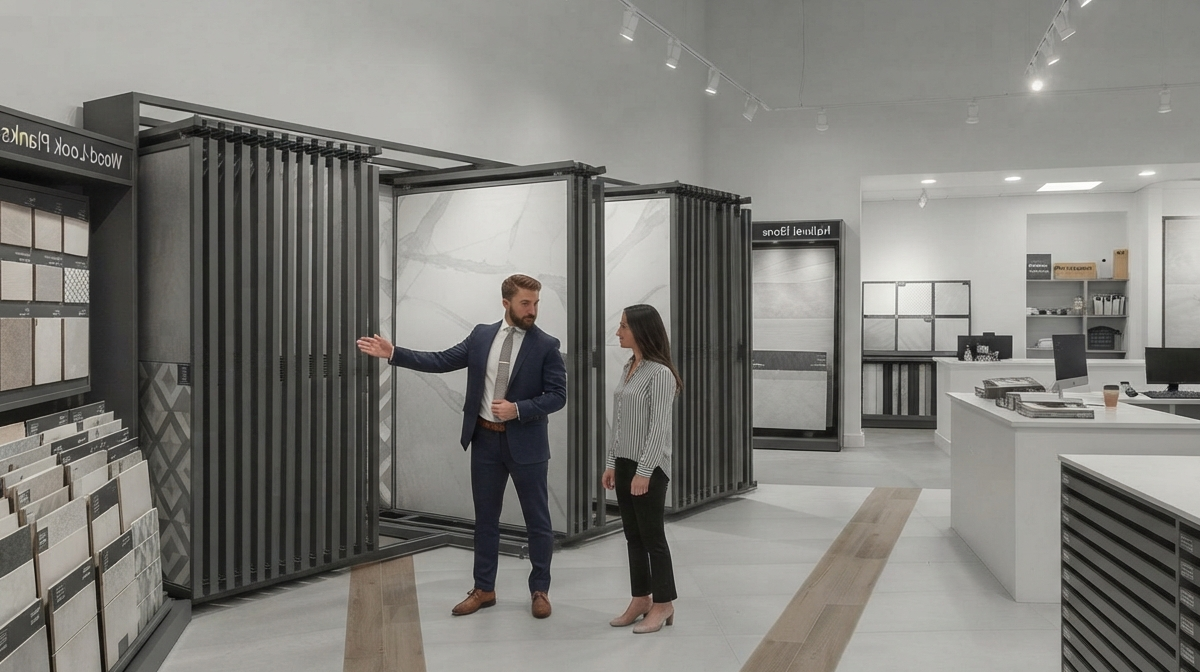
Creating an intuitive, visually stunning commercial space requires precise planning, especially when managing heavy and diverse inventory. When store managers and design consultants look into how to organize a tile showroom, their main goal is to balance aesthetic elegance with maximum floor efficiency. Traditional stacking methods lead to chipped edges, customer frustration, and wasted square footage. Knowing how to organize a tile showroom effectively directly influences your retail conversion rates and customer satisfaction.
Transitioning to Modular Vertical Systems
The foundation of any well-organized tile gallery relies on vertical hardware that keeps samples secure while allowing clients to browse effortlessly. Instead of laying ceramic, porcelain, and stone tiles in unmanageable horizontal piles, smart showroom design utilizes specialized structural frames.
- Sliding Panel Fixtures: Installing a sliding tile display system lets visitors slide and inspect multiple large tile panels within a compact, space-saving footprint.
- Specialized Sample Racks: Incorporating a dedicated showroom tile sample display rack gives your sales team an organized station for presenting individual colorways and texture finishes during client consultations.
Optimizing Lighting and Customer Flow
Learning how to organize a tile showroom goes beyond physical hardware layout; it also involves guiding the buyer’s eye and creating a comfortable browsing experience. Tile surfaces react heavily to lighting angles, making proper illumination vital.
- Strategic Lighting Placement: Ensure your display stands are positioned under balanced gallery lighting to highlight surface glazes, matte finishes, and subtle stone veining accurately.
- Clear Walkways and Zoning: Group materials logically by category—such as natural stone, polished porcelain, and outdoor pavers—while keeping main aisles wide and obstruction-free.
- Accessory Protection: Protect sample corners and edges from chipping during frequent customer handling by integrating durable hardware components and edge guards.
A well-organized showroom transforms heavy construction materials into an inspiring collection of design possibilities.
Integrating Backroom Inventory Management
While your front-of-house displays capture attention and inspire confidence, efficient backroom organization ensures your business runs smoothly behind the scenes. Coordinating heavy-duty backup stock storage allows staff to fulfill orders quickly without disrupting the serene atmosphere of the showroom floor.
Conclusion
Mastering how to organize a tile showroom elevates your retail environment, builds brand trust, and accelerates purchasing decisions. By replacing chaotic floor stacks with modular sliding systems and organized sample racks, you create a sophisticated destination for contractors, interior designers, and retail buyers alike.