Most showroom owners know what a display costs to buy. Few know what a poor one costs to keep. The losses never show up on an invoice. A rug gets creased in a pile, a customer leaves before seeing the full range, and a salesperson spends another hour lifting stock instead of selling it. If your carpet display stand is old, cramped or hard to use, you are paying for it every week. This guide shows where the money goes, how to put a rough number on it, and what to look for in a display that pays for itself.
Damaged Stock Nobody Counts
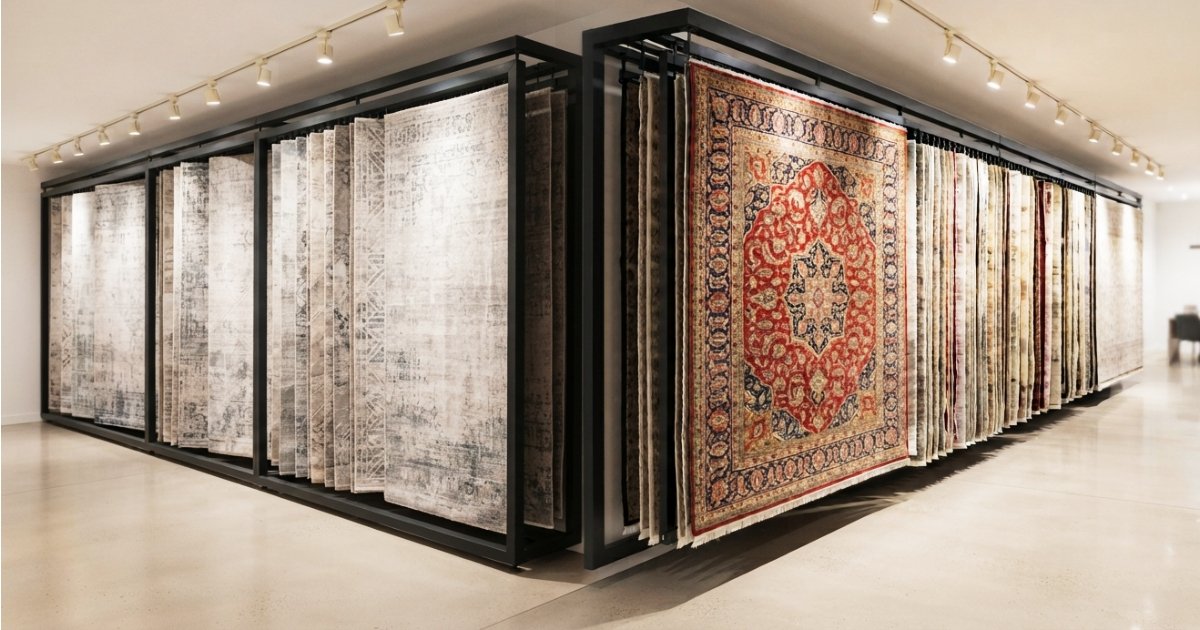
Damaged rugs rarely get written off. They get moved to the back, discounted quietly or sold as “slightly marked.” That is still money lost. Rugs stacked in piles carry the weight of everything above them, so the pile flattens and the edges crease. Rugs folded to fit a shelf pick up lines that may never drop out. Dust settles on the top rug of every pile, and each time someone pulls a rug out, the corners get dragged and scuffed. Each case looks minor. Across a whole collection, the value lost before a single sale adds up fast. A rug hung by its top edge on a proper hanger avoids almost all of this, because nothing presses on it and nobody has to drag it out.
Sales You Never Knew You Lost
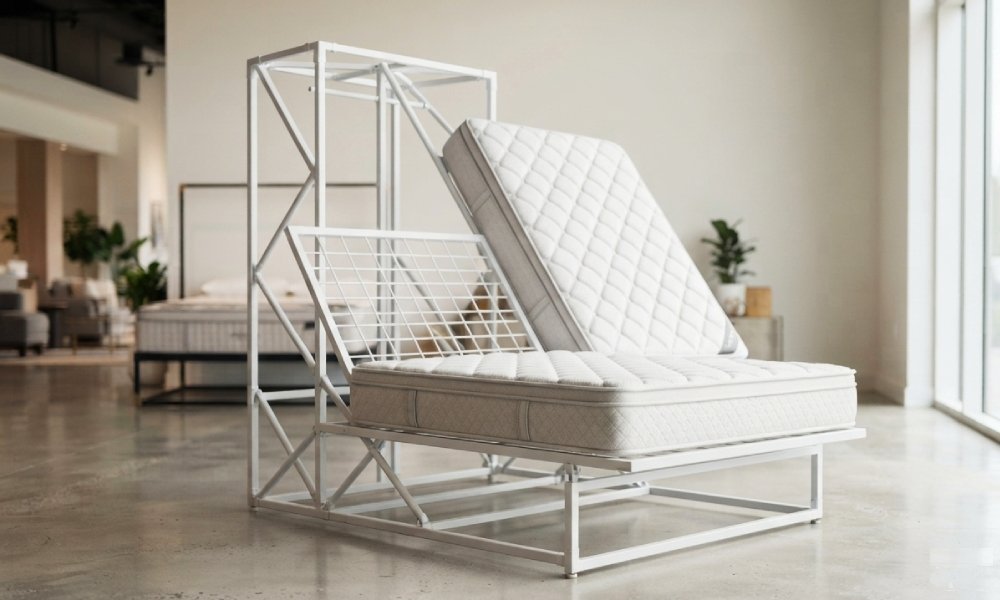
Lost sales are the hardest cost to see, because the customer simply walks out. They rarely tell you why. The most common reason is that they could not see enough. If only the first few rugs in a pile are visible, shoppers judge your whole range by those few. If pulling out a rug means asking for help, many will not bother. And if the floor feels cramped, buyers feel rushed and leave before they find the design they wanted. Think about the last time you shopped somewhere that made browsing hard. You probably didn’t complain. You just bought somewhere else. Your customers behave the same way. Retail experts quoted by FloorTrends stress choosing displays by the return they earn on the floor space they use. A display that hides your range earns very little, however cheap it is to buy.
Staff Time Spent Lifting Instead of Selling
Every rug your team lifts is a minute they are not advising a customer. On a busy Saturday, three people moving ten rugs to show one design means three people who are not selling. Over a year, that becomes hundreds of hours of heavy, repetitive work. It also tires your staff and raises the chance of dropped or dragged rugs. There is a training cost too. New staff take time to learn which pile hides which design. On a display where every rug has its place and slides into view, a new hire can help customers on day one. A display that lets any rug glide forward with one hand turns the job from lifting into advising.
A Showroom That Looks Cheaper Than Your Rugs
Customers judge the quality of your rugs by the space around them. Squeaking rails, chipped paint and sagging hangers send a clear message: this shop does not take care of its stock. A clean, quiet display with good lighting sends the opposite message, and it supports a higher price. Lighting matters more than most owners expect, because colour and texture are exactly what buyers are paying for.
Do the Math: What a Weak Carpet Display Stand Costs You Each Year
You can estimate your own loss in ten minutes. Here is an example with made-up numbers. Replace them with yours.
Damaged stock: Suppose ten rugs a year lose $150 of value each from creases and dust. That is $1,500.
Lost sales: Suppose one browsing customer a week leaves without buying because they could not see the range, and your average sale is $400. That is about $20,800 a year.
Staff time: Suppose your team spends 30 minutes a day lifting and re-stacking rugs, six days a week. That is around 150 hours a year.
Even if you cut these numbers in half, the total is often larger than the price of a good display. The aim is not to scare you. It is to help you compare the cost of upgrading with the cost of waiting.
What a Good Carpet Display Stand Gives You Back
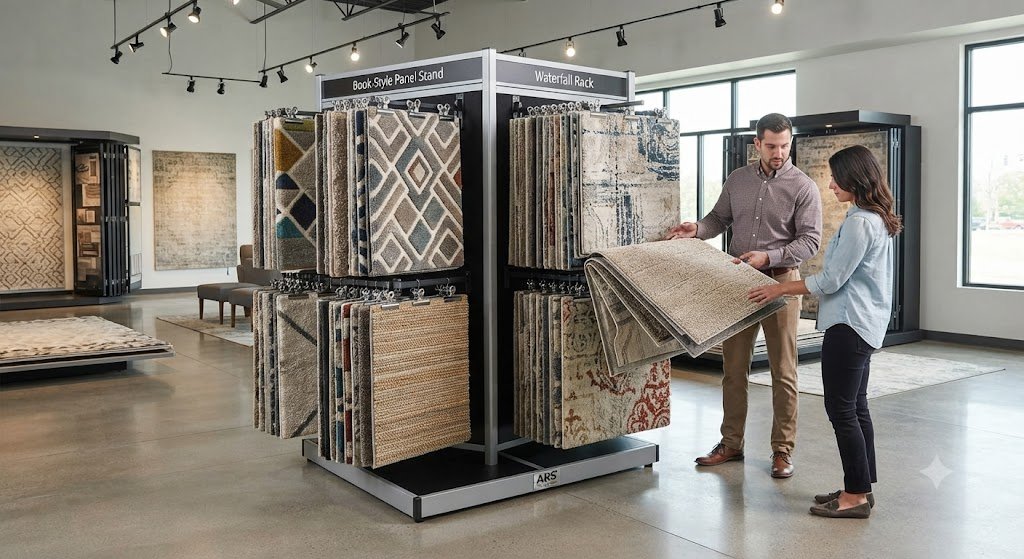
Protection: hanging each rug by its top edge keeps weight off the pile and dust off the surface. ARS sliding stands use aluminium channels and hangers for stable support.
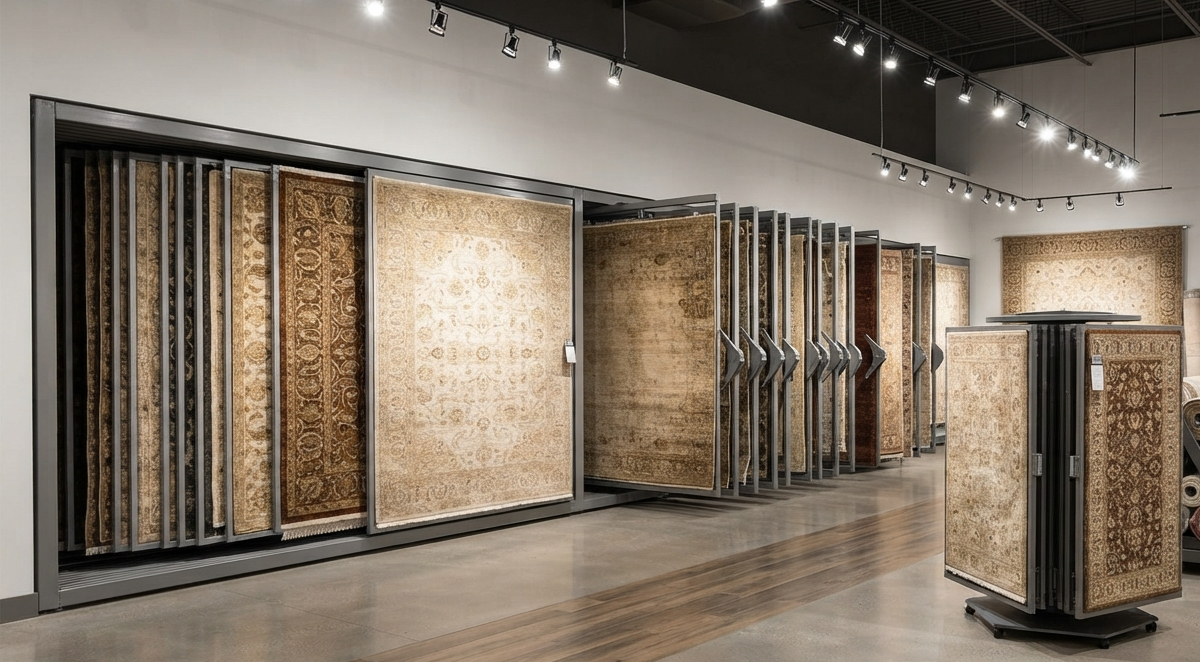
Easy browsing: sliding hangers let customers pull forward any rug without disturbing the rest. The ARS sliding action is noise-free, so browsing stays quiet and smooth.
Good lighting: built-in LED and focus lights show colour and texture properly.
A finish that lasts: ARS stands are powder-coated at 300 degrees to stand up to daily wear and tear.
A fit for your floor: ARS builds displays to your size and quantity, with models that hold from 20 to 70 carpets. If your floor is full, the ARS ceiling mounting display rugs from above and keeps walkways clear. You can see the sliding option in the small sliding display stand from ARS.
Stop Losing Money to a Weak Carpet Display Stand
You don’t need to replace everything at once. Start by walking your showroom the way a customer would. Try to find a rug three layers back, and notice how long it takes and how it feels. Then use the numbers above to decide what a better display is worth to you. When you’re ready, send ARS your showroom size and the number of rugs you want to show, and you’ll get a quote for a setup made to fit.