
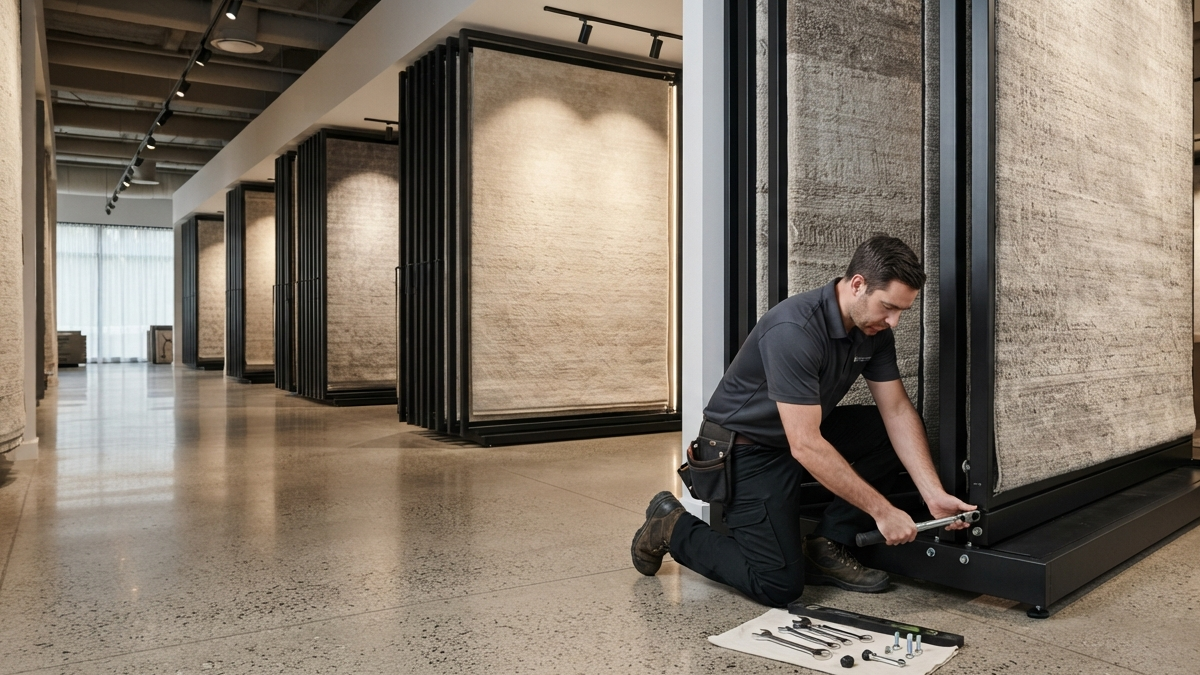
Proper installation of retail showroom hardware is essential to ensure both structural safety and effortless customer interaction. When store owners, contractors, and boutique managers research how to install a carpet display stand, they are typically looking for actionable steps to set up heavy-duty vertical racks, swing panels, or sliding systems without compromising retail floor space. Following a methodical setup procedure prevents structural sagging and guarantees years of reliable commercial performance. Mastering how to install a carpet display stand safely protects your staff and ensures a smooth showroom launch.
Pre-Installation Preparation and Site Inspection
Before unboxing your display hardware, a thorough site assessment ensures that your retail floor and supporting walls can handle the physical load.
- Floor Load Verification: Ensure your showroom floor is level, solid, and capable of supporting weighted vertical steel frames and dense wool carpet rolls.
- Wall Anchoring Assessment: If you are installing wall-mounted sliding tracks or perimeter display bays, verify stud placement or masonry integrity before drilling.
- Unpacking and Hardware Check: Lay out all structural components, fasteners, bolts, and alignment brackets to confirm complete inventory against manufacturer specifications.
Step-by-Step Installation Protocol
Understanding how to install a carpet display stand requires precision alignment, especially when dealing with sliding tracks and heavy sample panels.
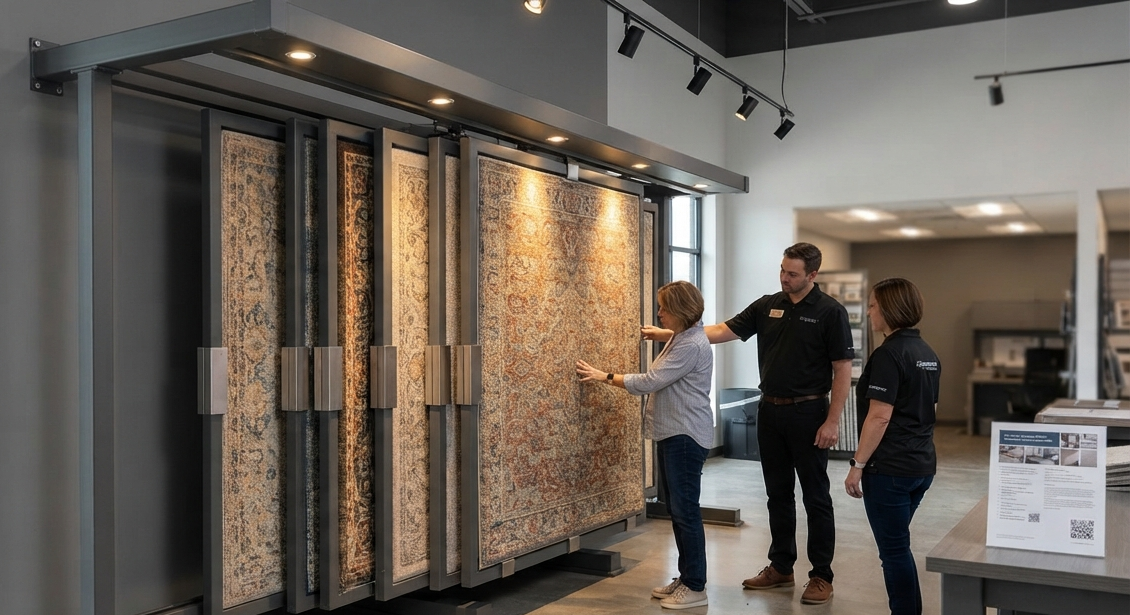
A professionally installed vertical sliding display system allows clients to easily inspect high-end rug textures.
- Base Frame Positioning: Assemble the primary floor base or vertical support columns according to the manufacturer manual, using a spirit level to ensure absolute vertical alignment.
- Track and Carriage Alignment: Secure overhead or bottom sliding tracks carefully. Smooth gliding performance depends entirely on precise parallel alignment of the tracks.
- Mounting Panels and Swatches: Hang individual display arms or sample panels one by one, testing the movement range and weight distribution after each addition.
Integrating Professional Finishing Hardware
Once the main display structure is securely bolted into place, focus on the finishing details that protect your merchandise and enhance customer usability.
- Protecting Textile Edges: Prevent fringe fraying and corner wear during active customer browsing by attaching durable carpet display clips stainless steel.
- Optimizing Visual Impact: Position spotlights or integrate advanced lighting systems, such as carpet display systems with integrated LED lighting, directly above the installed stand.
- Coordinating Backroom Racks: Ensure your new showroom display is complemented by sturdy industrial bulk order carpet display racks in your storage area.
A precise, professional installation transforms raw metal components into a seamless, high-converting retail gallery.
Sourcing Expert-Backed Hardware
The ease and reliability of installation often trace back to the quality of manufacturing. Sourcing robust, pre-engineered display units from an experienced carpet display system manufacturer India ensures that bolt holes align perfectly and structural components fit together smoothly.
Conclusion
Knowing how to install a carpet display stand correctly safeguards your capital investment and protects your high-end inventory. By following systematic preparation, ensuring precise track alignment, and utilizing professional mounting accessories, you establish a safe, breathtaking showroom environment that elevates your brand authority.