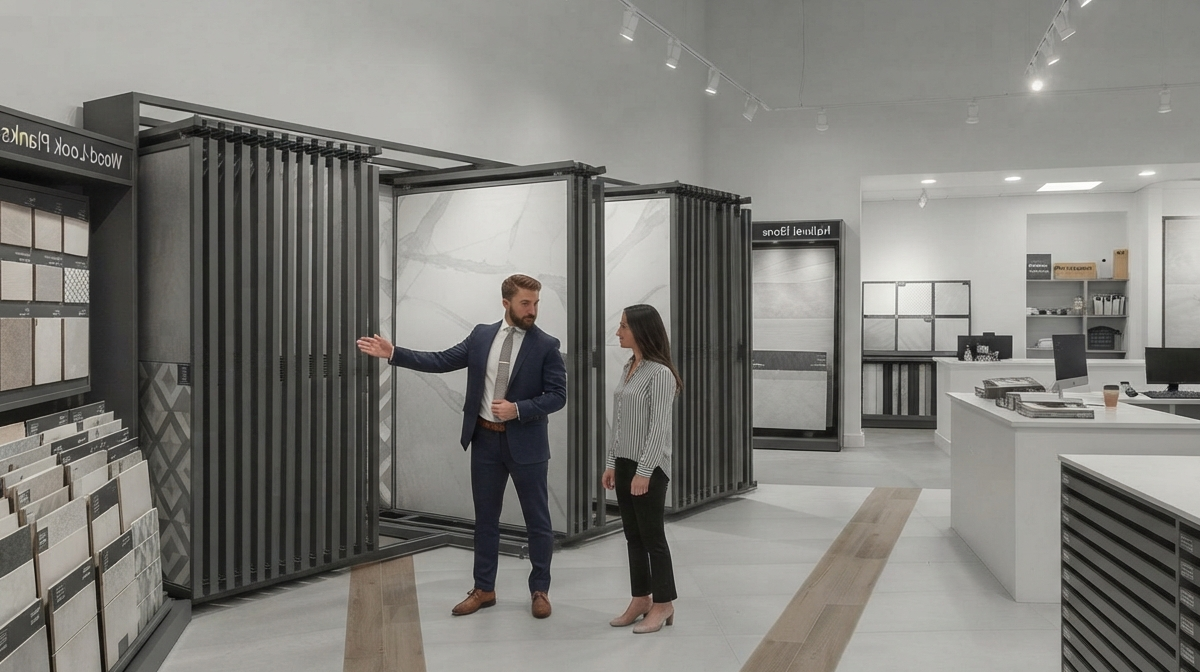
When opening or upgrading a commercial flooring store, the physical environment acts as your silent salesperson. Store owners often struggle to balance inventory visibility with a clean, high-end atmosphere. Integrating creative flooring store display ideas can fundamentally change how interior designers and retail buyers perceive your collection.
| Strategy Focus | Traditional Setup | Optimized Showroom Approach | Impact on Sales |
|---|---|---|---|
| Spatial Layout | Floor piles and heavy stacks | Vertical sliding panels | Saves 60% floor space |
| Sample Access | Hidden in backroom bins | Interactive swatch bars | Speeds up B2B decisions |
| Visual Appeal | Cluttered and fluorescent | Neutral gallery walls | Enhances perceived value |
Transforming Spatial Dynamics with Smart Layouts
To truly elevate your retail environment, you need to break away from conventional layouts. Exploring unique flooring store display ideas allows you to maximize every square foot of your showroom floor. When dealing with heavy hand-knotted carpets, rigid laminate boards, and ceramic tiles, spatial management dictates both customer comfort and commercial profitability.
Core Pillars of Modern Showroom Architecture
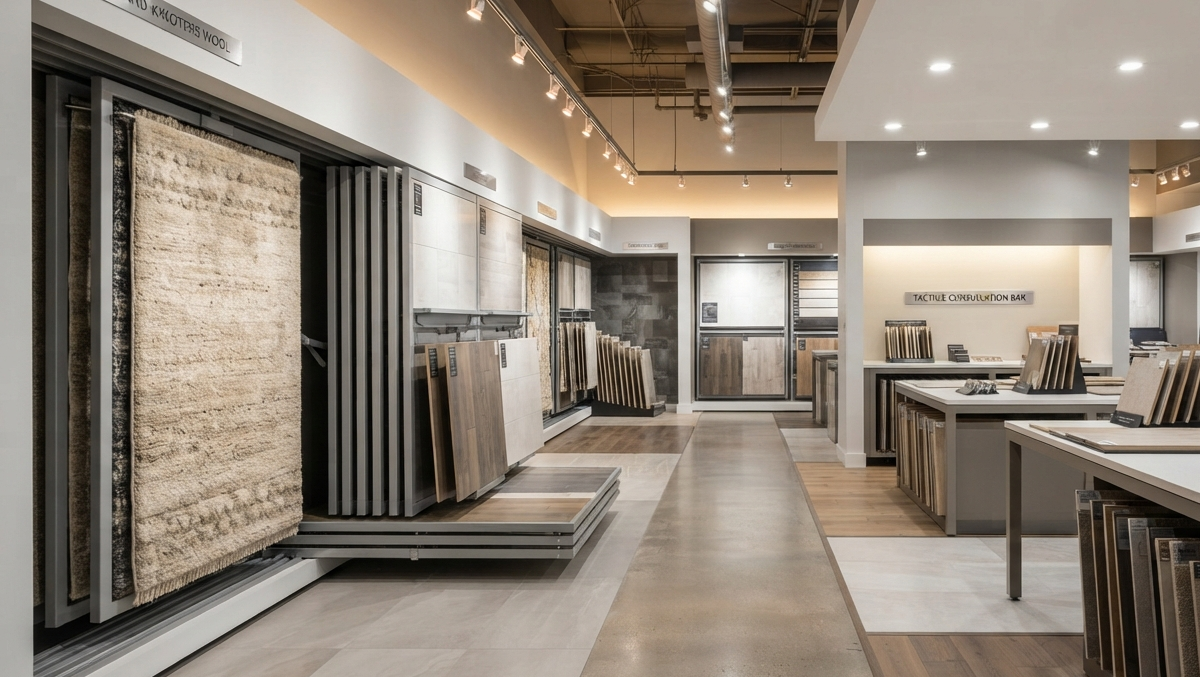
- Vertical Integration: Utilize wall-mounted and pullout sliding frames to house extensive heavy samples without swallowing valuable floor square footage. If you need to organize massive inventory rows efficiently, exploring options like bulk order carpet display racks can dramatically change your floor workflow.
- Zoning Strategies: Separate high-end hand-knotted wool rugs from commercial synthetic tiles using distinct architectural partitions and color palettes.
- Tactile Consultation Bars: Build dedicated low-profile tables where trade clients can evaluate backing materials, pile weight, and color variants side-by-side using professional carpet display clips stainless steel.
A well-designed showroom does more than just show merchandise; it tells a compelling story of craftsmanship and durability that builds immediate buyer trust.
The Psychology of Customer Movement and Lighting
Traffic flow is just as vital as the display racks themselves. If your aisles are cramped, high-end architects and interior designers will feel rushed. Keep primary pathways wide, clear, and unobstructed.
Furthermore, lighting can completely make or break a material sale. Harsh overhead fluorescent bulbs wash out natural vegetable dyes and subtle wood grain undertones, while overly dim lights hide fine craftsmanship. Aim for a layered lighting design that combines warm ambient track lighting with concentrated spotlights over your primary feature displays, similar to advanced setups featuring carpet display systems with integrated LED lighting.
Quick Implementation Checklist for Store Owners
- Audit Floor Plans: Remove tight, narrow corridors to ensure smooth, uninhibited visitor movement.
- Upgrade Hardware: Replace outdated static bins with modular swing-panel display racks that let clients browse effortlessly.
- Refine Signage: Eliminate messy handwritten paper tags in favor of clean metallic labels or digital QR specs.
Maintaining Long-Term Showroom Appeal
Even the most extraordinary display systems will lose their impact if they are not maintained. Establish a daily morning checklist to dust sliding tracks, straighten fringe edges, and wipe down metal frames. A pristine display communicates uncompromising quality and reassures B2B clients of your manufacturing standards.
By executing thoughtful flooring store display ideas, you protect your luxury inventory while crafting an immersive, memorable experience for every commercial client that walks through your doors, proving why advanced flooring store display ideas are essential for modern retail success.