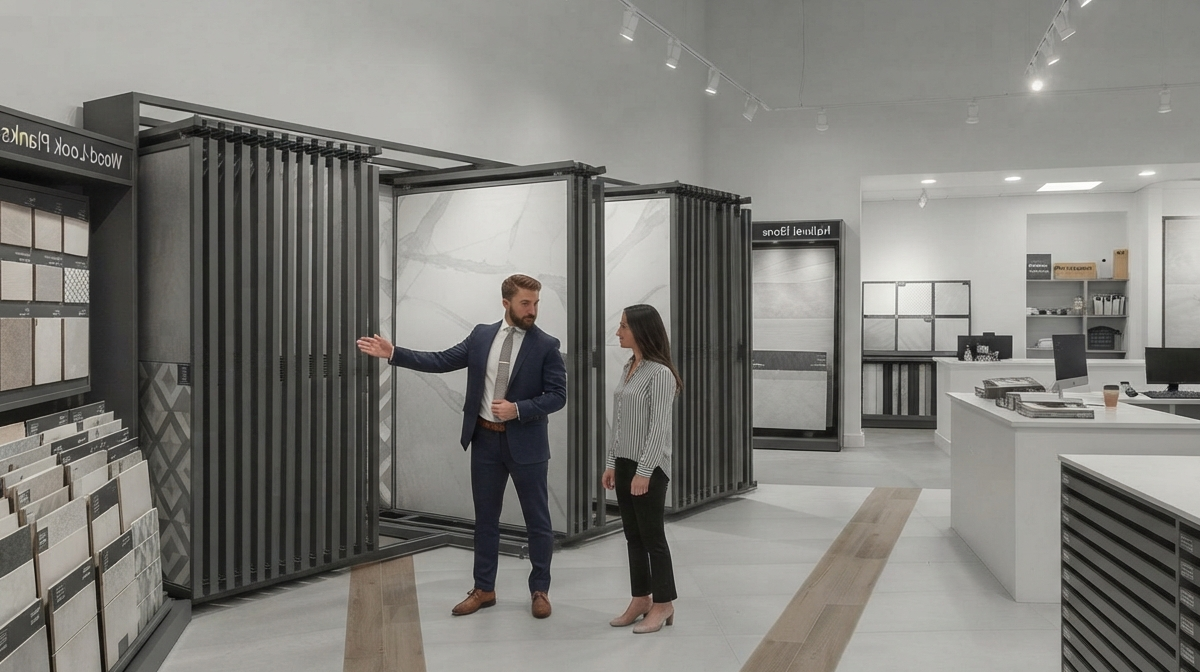
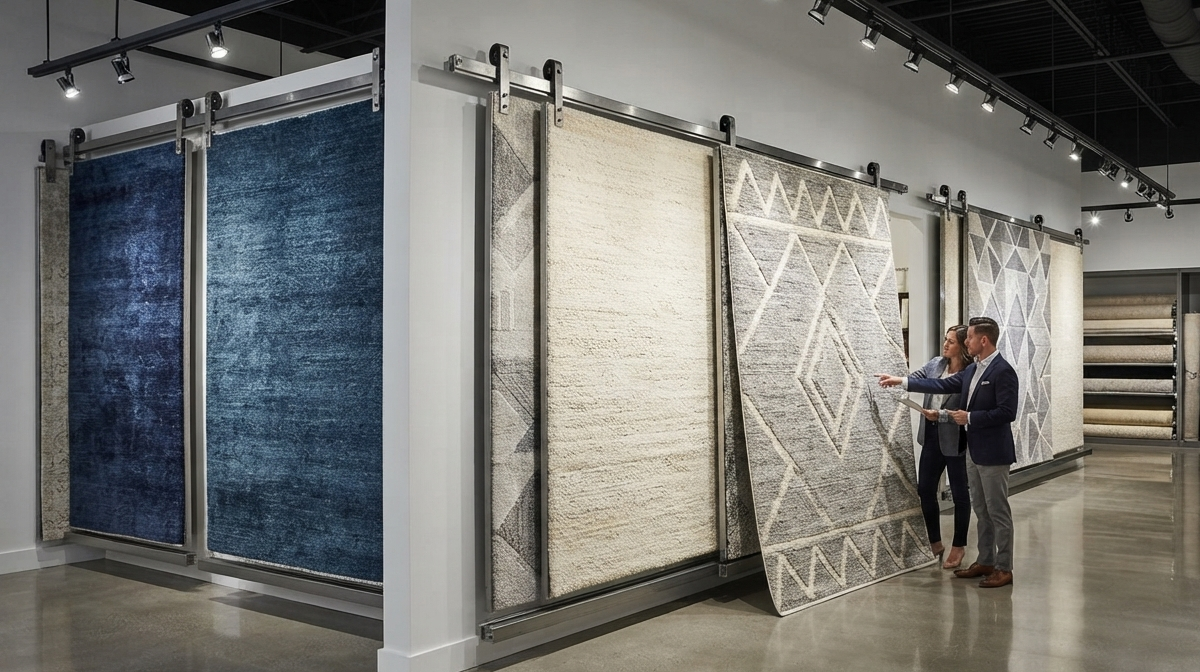
When interior designers, homeowners, and commercial procurement managers step into a modern flooring showroom, their purchasing decisions are heavily influenced by the environment. Long before they touch a sample of hand-knotted wool, examine a tufted area rug, or compare broadloom densities, their eyes scan the floor and walls. In an industry where tactile experience dictates luxury, the physical presentation of your inventory can either elevate your brand or clutter your space.
For decades, traditional carpet retailing relied on stacking heavy rugs on top of one another or storing them in dark, cramped warehouse bins. Not only did this make browsing exhausting for customers, but it also resulted in premature wear, creasing, and dust accumulation. Enter the sliding carpet display system—a revolutionary retail hardware innovation that has become the gold standard for high-end flooring showrooms, rug export houses, and tile display centers across the globe.
In this comprehensive guide, we will explore what a sliding carpet display system is, how it works, its mechanical anatomy, why it is a vital investment for modern showrooms, and how brands like ARS Display Systems engineer these fixtures to maximize retail ROI.
1. Defining the Sliding Carpet Display System
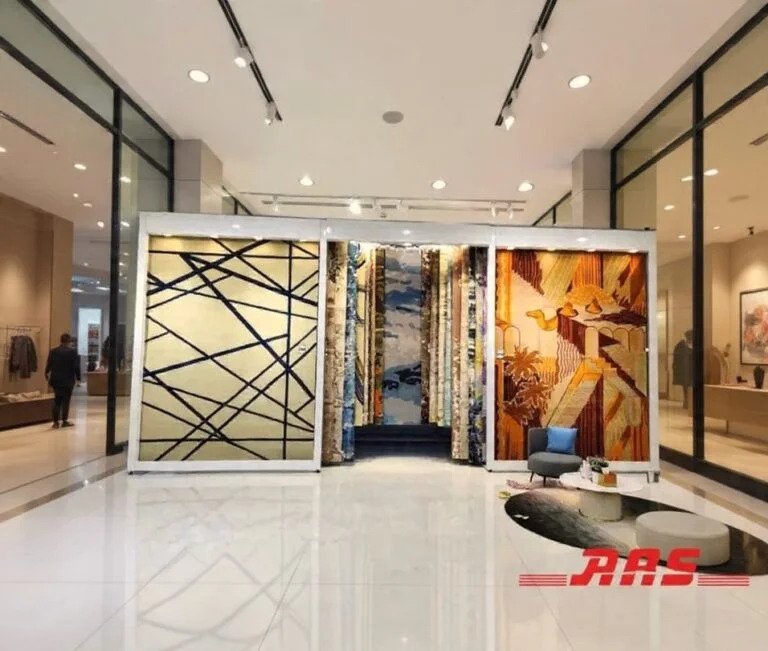
At its core, a sliding carpet display system is a specialized, heavy-duty retail hardware assembly designed to mount, organize, and showcase full-sized carpets, broadlooms, and large area rugs vertically.
Rather than laying rugs flat on the ground or folding them horizontally into shelving units, a sliding system suspends each rug from an independent sliding panel, carrier arm, or specialized hanging clamp attached to overhead tracks. These tracks—typically manufactured from heavy-gauge steel or extruded architectural aluminum—allow the individual panels to glide smoothly back and forth with minimal friction.
Think of it as a life-sized, vertical library catalog or sliding wall partition where each “page” is a premium rug sample. This allows a customer or showroom consultant to effortlessly pull out a single rug into full view, inspect its texture and color under proper showroom lighting, and slide it back just as easily to view the next option. For broader insights into retail layouts.
2. Anatomy and Technical Components of a Sliding System
Understanding the engineering behind a professional sliding carpet display system reveals why cheap, improvised retail racks fail and why industrial-grade systems are essential. A robust system comprises several key components:
A. Overhead and Floor Guide Tracks
The foundation of any sliding display is its track system. High-end systems utilize extruded aluminum profiles or heavy-duty steel channels mounted securely to structural walls, ceiling beams, or reinforced header boards. Some floor-supported systems also incorporate bottom guide tracks to eliminate swinging and ensure perfectly linear movement under heavy loads. If you are exploring alternative configurations, you might want to compare options in our rug display stand vs rack guide.
B. Suspension Hangers and Clamps
Because rugs and carpets—especially dense hand-knotted wools, silk blends, and heavy broadlooms—can weigh anywhere from 20 to over 100 kilograms per piece, the gripping mechanism must be exceptionally secure. Industrial stainless steel or alloy aluminum carpet display clamps (such as those featured in our carpet display clips collection) grip the top binding of the rug uniformly, distributing the weight across the entire width to prevent tearing, slipping, or fiber damage.
C. Ball-Bearing Roller Carriages
Smooth operation is the hallmark of a luxury showroom. Precision ball-bearing rollers or nylon-coated carriage wheels sit inside the overhead tracks, allowing even massive, oversized rug panels to glide open with a gentle push of a single finger.
When paired with rug sliding display hangers, the system operates with absolute fluidity.
D. Modular Panel Frames vs. Direct Hangers
Depending on the showroom layout, sliding systems can be configured in two primary styles:
- Panel-Based Systems: Rugs are mounted onto rigid framed sliding panels (often framed in matte black, brushed aluminum, or powder-coated finishes) like our popular sliding carpet display system.
- Direct-Hanging Systems: Rugs are suspended directly from sliding arms via heavy-duty carpet clips, maximizing visibility and reducing structural bulk.
3. Why Traditional Storage and Display Methods Fall Short
To truly appreciate the value of a sliding carpet display system, it helps to examine the alternative display methods historically used in rug retail and why they hinder sales.
The Problem with Floor Stacking
Piling rugs flat on top of each other on the showroom floor creates several severe drawbacks:
- Physical Fatigue: Lifting heavy rugs requires immense physical labor from sales staff, often limiting how many options a customer can see before getting tired.
- Inventory Damage: Constant friction, crushing weight, and foot traffic over stacked samples lead to crushed pile, fiber distortion, creased backing, and premature staining.
- Wasted Space: Floor stacking consumes valuable square footage that could otherwise be used for customer consultation desks, lighting displays, or featured collections.
The Problem with Static Fixed Racks
While fixed vertical racks keep rugs off the floor, they are rigid and inflexible. They make it difficult to pull a middle sample out without shifting adjacent items, and they often lead to cramped, noisy showroom environments where metal rubs against metal. For retail stores looking for budget considerations, reviewing details on how much a rug display rack costs can help guide your procurement strategy.
4. Key Advantages of Sliding Carpet Display Systems for Showrooms
Investing in a professionally engineered sliding display setup offers transformative benefits across retail operations, merchandising, and customer psychology.
A. Maximizing Vertical Real Estate
In commercial real estate, every square foot carries a financial cost. Sliding systems capitalize on vertical wall space, enabling showrooms to display dozens of full-sized or oversized rug samples within a compact footprint. A wall that might normally hold only two or three static samples can suddenly accommodate ten to twenty sliding panels in the exact same linear expanse. Showrooms can also integrate specialized units like sliding area rug display stands to further optimize corner spaces.
B. Elevating the Customer Experience (“Quiet Luxury” Browsing)
Modern high-end retail is all about friction-free, immersive experiences. When a customer enters a rug showroom, they want to focus on color palettes, knot density, and tactile softness—not struggle with heavy merchandise. The effortless gliding motion of a well-maintained sliding system delivers a sense of “quiet luxury,” empowering customers to browse independently and comfortably.
C. Superior Product Preservation and Longevity
Because sliding systems suspend rugs naturally in a vertical position, gravity works in favor of the fabric. The pile remains uncompressed, backing materials stay flat without folding creases, and air circulates freely around the fibers, preventing moisture retention and musty odors. Furthermore, keeping samples off the floor protects them from dust, dirt, and accidental spills.
D. Optimized Showroom Aesthetics and Visual Merchandising
A disorganized showroom creates cognitive overload for buyers. Sliding carpet racks provide a clean, architectural, and minimalist aesthetic. When closed, the system presents a unified, flush wall of curated textiles. When opened, it reveals organized layers of color and texture. This professional polish builds immediate brand trust with high-end interior designers and retail buyers.
5. Applications Across the Textile and Flooring Industry
Sliding carpet display systems are versatile hardware solutions utilized across multiple sectors of the home decor and manufacturing ecosystem:
- Retail Flooring Showrooms: Independent and chain flooring stores use wall-mounted sliding racks to display broadloom carpets, vinyl rolls, and area rugs side by side.
- Carpet Manufacturing and Export Houses: Exporters in major manufacturing hubs (such as Bhadohi, India) utilize heavy-duty sliding bays in their factory sample rooms to present massive product catalogs to international importers and B2B buyers. For wholesale options, browse our carpet display stand wholesale collection.
- Interior Design Studios & Architect Libraries: Design professionals install compact sliding sample systems to organize textile swatches, custom rug strikes-offs, and broadloom books in a sophisticated studio environment.
- Tile and Multi-Surface Showrooms: Similar sliding rail mechanisms are widely adapted for ceramic tiles, stone slabs, and hardwood flooring panels, creating unified cross-merchandising displays. Many showrooms pair these with sliding tile display stands for a cohesive aesthetic.
6. Choosing the Right Sliding System for Your Showroom
When selecting or custom-ordering a sliding carpet display system for your business, several technical and spatial factors must be evaluated:
- Weight Capacity & Structural Load: Ensure the walls or ceiling structures supporting the overhead tracks can handle the cumulative weight of heavy wool or silk rugs. Industrial-grade steel framing is required for heavy broadlooms, while lighter aluminum channels suffice for sample-sized runners.
- Panel Dimensions & Clearance: Measure your ceiling height and available wall width. Standard systems are engineered for typical commercial ceiling heights (8 to 12 feet), but custom fabrication ensures a flush, built-in architectural finish.
- Finish and Hardware Aesthetics: Match the hardware finish (such as matte black powder coat, brushed stainless steel, or anodized silver) to your showroom’s interior design theme. Minimalist neutral tones complement modern organic and “quiet luxury” retail concepts.
- Lighting Integration: Many advanced sliding setups incorporate overhead LED spotlighting or track lighting channels to illuminate each panel as it is pulled out, ensuring accurate color rendering of the rug fibers. You can also explore specialized models such as our carpet display system with integrated lighting.
7. Conclusion: The Future of Showroom Merchandising
In an increasingly competitive global marketplace, how you display your products is just as important as the quality of the products themselves. Traditional, cumbersome stacking methods are rapidly giving way to intelligent, space-saving retail hardware.
A sliding carpet display system is much more than a simple storage rack—it is a strategic merchandising tool that protects your inventory, maximizes showroom space, reduces labor overhead, and delivers an unforgettable, luxury buying experience for your clients.
Ready to transform your retail space with custom-engineered showroom hardware? Explore heavy-duty sliding racks, sample display stands, and bespoke solutions designed for industry professionals at ARS Display Systems.