Stepping into a high-end rug and carpet gallery should feel like walking through an art exhibition. Yet, for many traditional manufacturers, exporters, and retail store owners, figuring out how to display rugs in a showroom without overwhelming the space or damaging the inventory is a constant challenge. When dealing with heavy hand-knotted wool, intricate silk weaves, and bulky flatweave dhurries, spatial management dictates both customer perception and commercial profitability.
If your floor layout is cluttered with messy floor stacks or awkward piles, buyers cannot properly evaluate texture, weight, or color accuracy. To maximize your retail efficiency, protect your merchandise, and close high-value sales, you need a structured layout strategy. Below, we break down ten expert techniques on how to display rugs in a showroom effectively, transforming your commercial space into an organized, high-converting retail environment.
1. Transition from Floor Piles to Vertical Sliding Displays
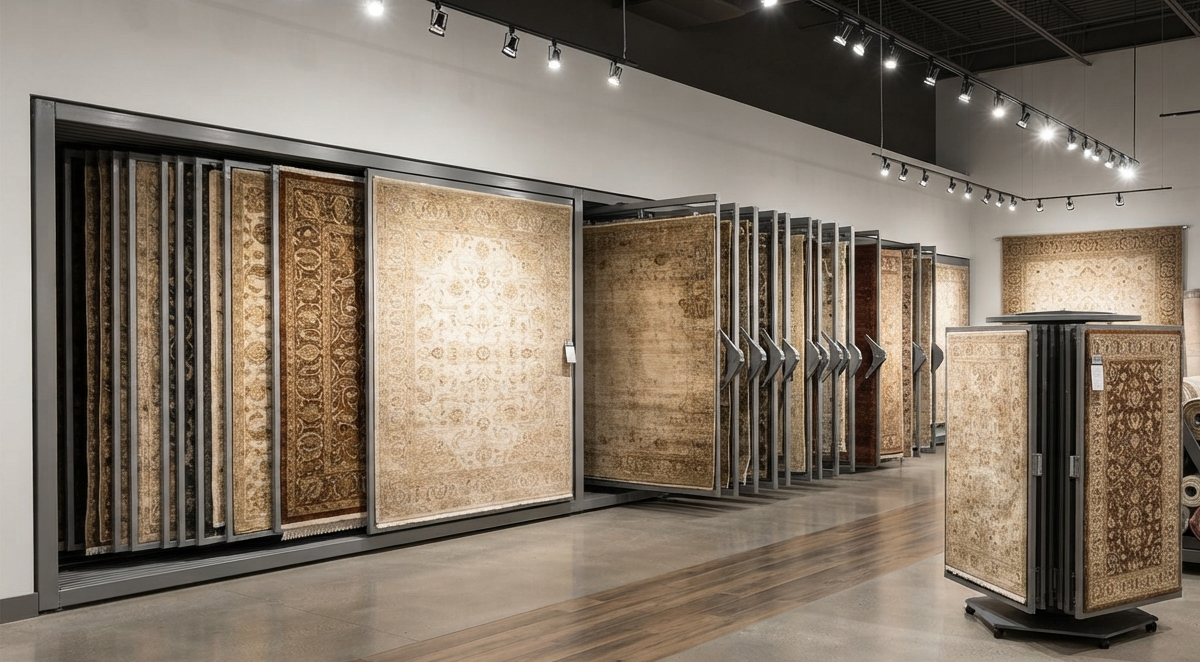
The single biggest mistake showroom owners make is laying massive carpet stacks flat on the floor. Not only does this limit the number of designs you can showcase at once, but constant foot traffic over loose piles also grinds dirt into delicate fibers. Implementing vertical sliding display stands allows you to display dozens of full-sized or sample rugs within a tiny footprint. Customers can easily slide panels back and forth, turning browsing into an engaging, tactile experience.
2. Categorize Your Inventory by Style and Intent
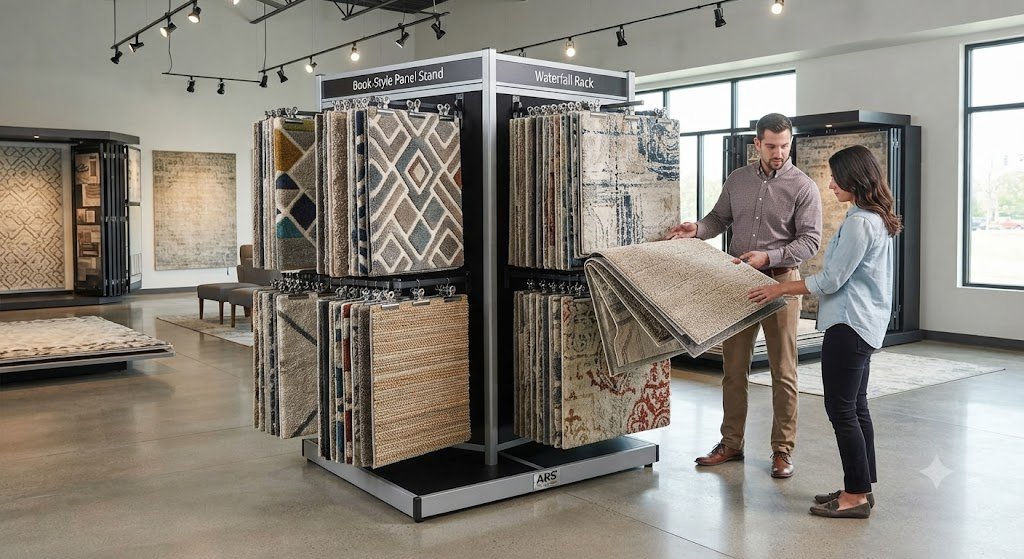
A disorganized showroom creates cognitive overload for interior designers and retail buyers. Never mix traditional Persian patterns directly next to modern geometric minimalism unless you are curating a specific transitional juxtaposition. Group your collections into dedicated zones—such as modern organic, vintage distressed, and classic traditional. If you are scaling up your storage layout, exploring heavy-duty options like bulk order carpet display racks can help you manage extensive inventory without clutter.
3. Optimize Lighting to Reveal True Textures and Hues
Lighting can completely make or break a rug sale. Harsh fluorescent overhead bulbs cast a cold glare that washes out vegetable dyes and subtle wool undertones, while overly dim lighting hides the intricate craftsmanship of hand-knotted textures. Aim for a layered lighting design combining warm ambient track lighting with concentrated spotlighting over feature racks. For advanced setups, integrating carpet display systems with integrated LED lighting ensures that every fiber glints accurately under true color temperatures.
4. Design Wide, Welcoming Walkways and Clear Sightlines
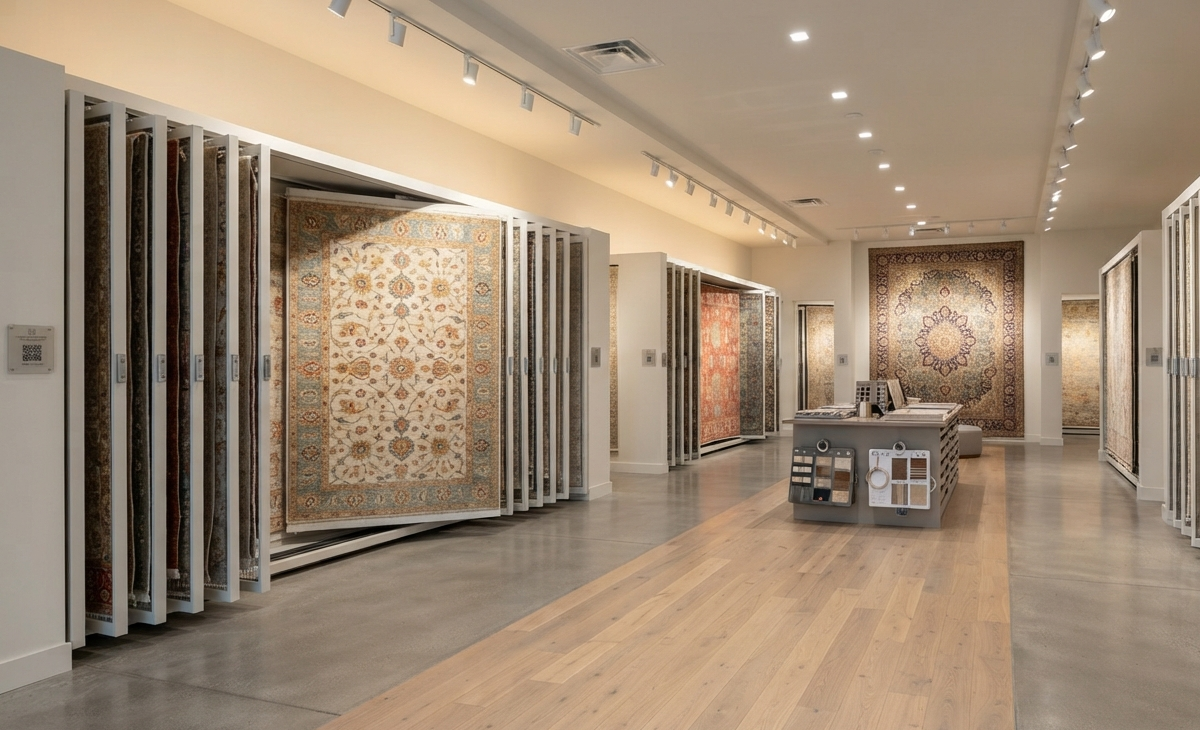
When studying how to display rugs in a showroom, traffic flow is just as important as the racks themselves. If your aisles are cramped, high-end clients and interior architects will feel rushed and uncomfortable. Keep primary pathways at least four to five feet wide, ensuring uninhibited movement toward anchor display areas. Clear sightlines from the front entrance allow visitors to instantly appreciate the depth and scale of your collection the moment they walk through your doors.
5. Incorporate Interactive Touchpoints for Interior Designers
Interior designers, architects, and wholesale buyers do not just look—they touch, bend, and test backing materials. Create specialized consultation zones where smaller sample boards or swatch rings are readily accessible. Allowing clients to pull out individual samples, feel the pile height, and place them next to other material swatches builds immediate confidence in your manufacturing quality.
6. Use Neutral Walls and Flooring as a Canvas
Your showroom architecture should amplify your rugs, not compete with them. Brightly colored walls, loud patterned tiles, or busy ceiling designs distract the human eye from noticing the craftsmanship of the carpet. Stick to a “quiet luxury” palette—such as matte off-whites, warm greys, or muted charcoal floors and walls. A neutral background allows the rich hues, organic textures, and complex borders of your rugs to take center stage naturally.
7. Highlight Featured Masterpieces on Feature Walls
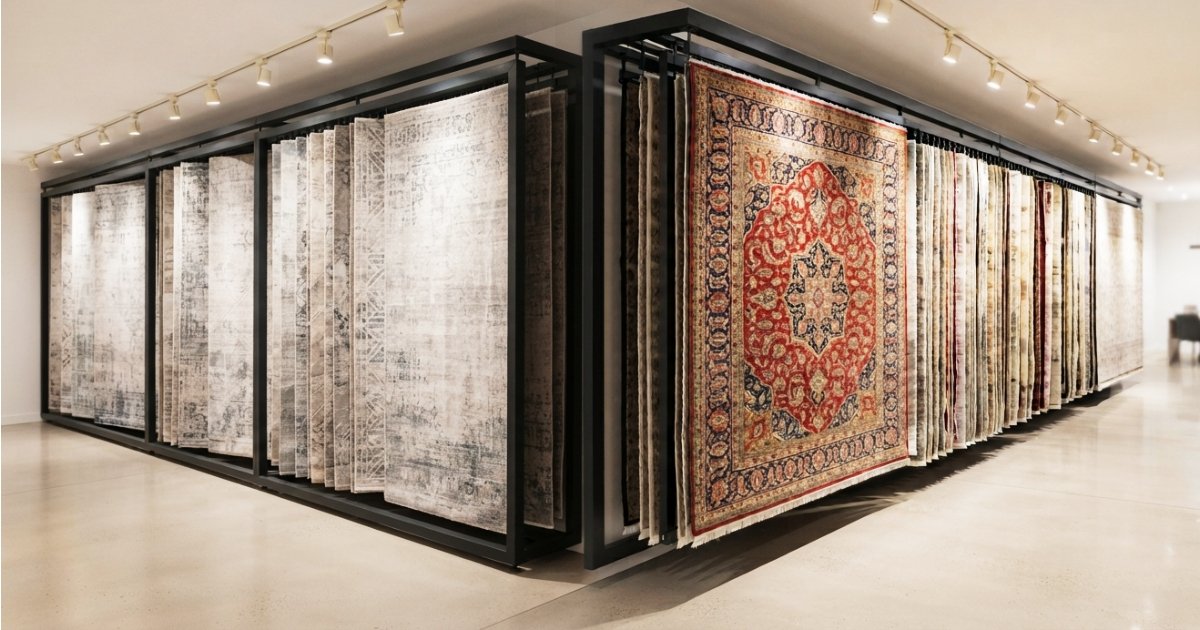
Every collection has a crown jewel—a magnificent, high-knot-count masterpiece or an avant-garde designer piece that showcases your brand’s pinnacle capabilities. Instead of hiding these items inside sliding racks, mount them flat on a dedicated accent wall or drape them gracefully over an elevated platform near the primary consultation desk. This creates a striking visual anchor that commands attention immediately.
8. Implement Digital Integration and Clear Pricing Signage
Modern showrooms bridge the gap between physical touch and digital convenience. Avoid messy, handwritten paper tags that cheapen the look of luxury textiles. Instead, use clean, minimalist metal tags or QR codes linked directly to your digital product catalog. This lets trade buyers instantly scan for specifications, dimensions, stock availability, and global shipping tiers.
9. Maintain Routine Maintenance and Fiber Care
Even the most expensive, hand-knotted silk and wool rugs will look dull if they collect showroom dust or display creases. Establish a daily morning routine where display panels are dusted, fringe lines are straightened, and sliding tracks are inspected for smooth operation. A pristine, well-maintained display communicates high quality and reassures B2B clients of your manufacturing standards.
Conclusion
Mastering how to display rugs in a showroom is an ongoing investment in your brand’s perceived value. By moving away from unstructured floor stacks, optimizing your spatial layout, and upgrading to professional sliding hardware and lighting, you protect your luxury inventory while creating an unforgettable environment that turns casual visitors into lifelong commercial partners.